How Replit Went From $4M to $100M ARR in 9 Months (The AI Agent Pivot That Changed Everything)
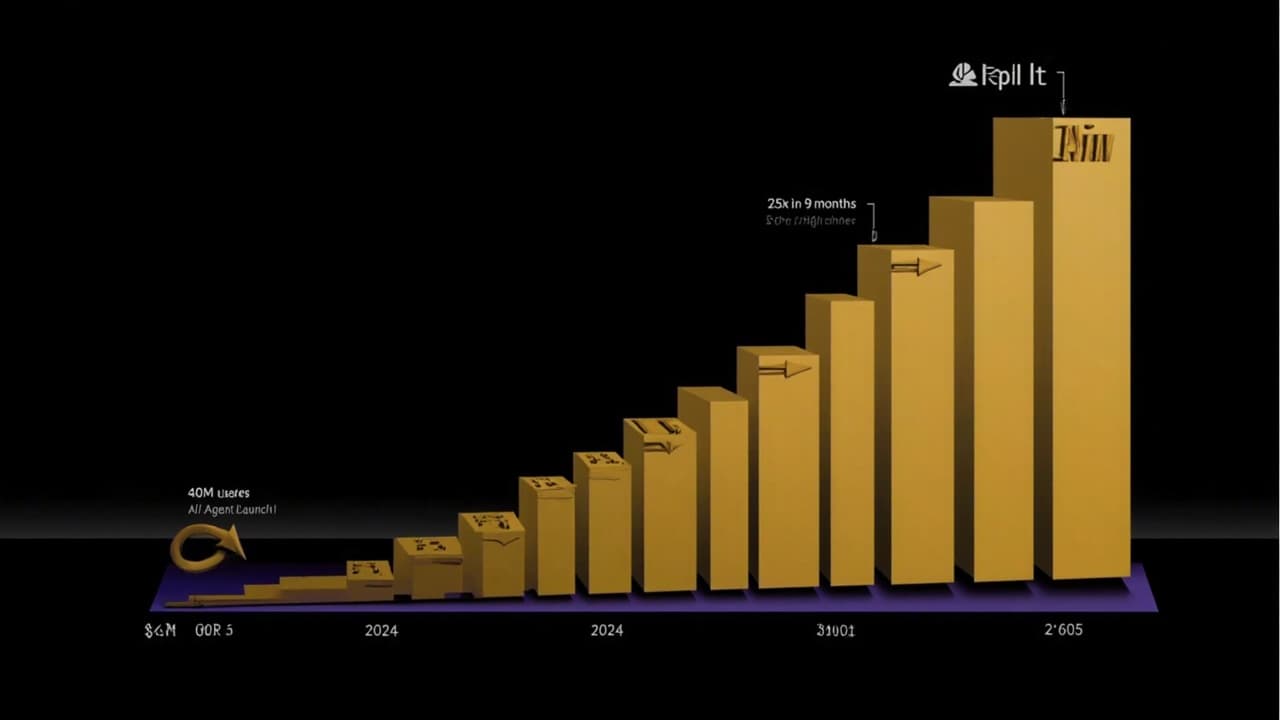
TL;DR: Replit spent 8 years building an online IDE that barely moved the needle. Then they launched an AI agent in September 2024 and 25x'd their ARR in under a year. The story is a masterclass in knowing when your infrastructure becomes the platform for something bigger.
I spent two days digging through every public data point I could find on Replit's growth. Amjad Masad's tweets, Kyle Poyar's deep dive interview, Sacra's revenue estimates, the SaaStr breakdowns, 30+ Reddit threads from developers who switched, and the Zillow case study that proved enterprise viability. After all of it, one pattern kept screaming at me that nobody's framing correctly.
Replit didn't pivot. They graduated.
The Numbers That Don't Make Sense (Until They Do)
Here's the timeline that made me do a double-take:
- End of 2024: ~$4M-$10M ARR (8 years in)
- June 2025: $100M ARR (confirmed by Amjad on X)
- Late 2025: $253M ARR (Sacra estimates)
- February 2026: projecting toward $1B-$2.5B ARR
That's not normal SaaS growth. That's not even hypergrowth. That's a completely different product finding a completely different market while wearing the same brand.
The subscriber base has been growing 45% month over month since the AI agent launched. For context, most "fast-growing" SaaS companies celebrate 10% monthly growth. Replit is doing 4.5x that. Consistently.
But here's what makes Replit different from every other AI coding tool success story. They didn't show up in 2024 with a wrapper around an LLM. They showed up with 8 years of infrastructure that nobody else could replicate.
The 8-Year Moat Nobody Noticed
Replit was founded in 2016 by Amjad Masad, who was previously a founding engineer at Codecademy (which taught 50 million people to code for free) and worked at Facebook on React.
The original vision: create an online cloud development environment. Simple enough. Except building it was brutally hard.
"It was way harder than expected," Amjad told Kyle Poyar. "It was very hard to raise money. We were lost in the desert for three years trying to bootstrap the company."
Y Combinator rejected them three times before finally accepting them in 2018. Three times. The company that would later 25x its revenue in nine months couldn't convince YC on the first, second, or third try.
By the time they launched AI Agent in September 2024, Replit had:
- 40 million registered users
- A complete cloud development environment
- Hosting infrastructure (you could deploy apps without leaving Replit)
- A community of developers who already trusted the platform
- $974M in total funding
None of that mattered much for the old product. All of it mattered enormously for the new one.
Why "Vibe Coding" Needed Replit (Not the Other Way Around)
Here's what most people get wrong about Replit's growth. They think the AI agent was the product breakthrough. It wasn't. The breakthrough was that Replit already solved the hardest problem in vibe coding: everything that happens after the code is written.
Think about what a non-technical person needs to go from "I have an idea" to "people are using my app":
- A way to describe what they want (AI agent handles this)
- Code generation (every AI tool does this now)
- A development environment (Replit had this)
- Testing (Replit had this)
- Deployment and hosting (Replit had this)
- Scaling (Replit had this)
Cursor, Windsurf, Bolt, Lovable. They all nail steps 1 and 2. Some handle step 3. Almost none handle steps 4-6 as a single integrated experience.
Replit's AI agent made 2 million apps in its first six months. 100,000 of those are hosted in production and being used by real people. That second number is the one that matters. Anyone can generate code. Replit turns generated code into running products.
Zillow used Replit Agent to build a customer routing system. No engineers involved. That's not a toy demo. That's enterprise software built by non-developers and running in production at a public company.
The UX Decision That Unlocked Everything
Amjad calls it "progressive disclosure." The concept is simple but most companies butcher the execution.
Most software tools fall into two buckets:
Bucket 1: Powerful but overwhelming. Adobe Photoshop. You open it and get slapped with 47 toolbars. Technical users love it. Everyone else bounces.
Bucket 2: Simple but constraining. Apple Notes. Canva. Easy to start, but you hit a ceiling fast and can't go deeper.
Replit wanted to be neither. They wanted the experience of Bucket 2 with the power of Bucket 1.
Their solution: a fully natural language interface (type what you want, Agent builds it) that's always two clicks away from the code editor or the operating system. You can stay in the simple lane forever. Or you can peel open additional layers one by one as you get more comfortable.
This matters because it means Replit's addressable market isn't "developers who want AI help." It's "anyone who has an idea for software." That's a fundamentally different (and larger) market.
Amjad confirmed this with data: the longer it takes someone to get their first "wow" experience, the lower activation and retention. So they optimized the first five minutes ruthlessly. You can click "habit tracker," and Agent builds the same proven app every time, sending you through an experience Replit knows will work.
Get the user to "wow" in minutes. Let them go deeper on their own timeline. That's the whole playbook.
The Growth Math: Why 45% Monthly Compounds Into Insanity
Let's do the math on 45% monthly subscriber growth because the numbers are genuinely hard to believe.
If you start at 10,000 subscribers and grow 45% monthly:
- Month 1: 14,500
- Month 3: 30,500
- Month 6: 93,200
- Month 9: 284,600
- Month 12: 869,000
That's 87x growth in a year at a consistent 45% monthly rate. Obviously this decelerates. But even if it drops to 20% monthly, the base is already enormous.
The pricing supports it too. Replit's free tier gets people in the door. The Replit Core plan at $25/month captures serious builders. Teams plans scale up from there. When you're converting from a 40M+ user base, even small conversion rate improvements create massive revenue jumps.
The key insight: Replit didn't need to acquire new users for the AI agent. They already had 40 million of them. The agent just gave existing users a reason to pay.
What Replit Got Right That Every AI Startup Should Study
1. They built infrastructure before they needed it.
Eight years of cloud IDE, hosting, and deployment infrastructure looked like a bad investment when they were stuck at $4M ARR. It looked like genius when AI agents needed somewhere to actually run the code they generated.
2. They didn't chase the AI hype. They waited for the AI hype to need them.
Every coding AI startup in 2023-2024 was rushing to market with LLM wrappers. Replit waited until they could integrate AI into their full stack. The result was a product that didn't just write code but actually shipped working software.
3. They solved the boring problems.
Deployment, hosting, scaling, environment setup. None of these are sexy. All of them are essential. When non-technical users started building apps with AI, the sexy tools generated code that couldn't go anywhere. Replit generated code that was immediately live.
4. They turned rejections into signal, not defeat.
Three YC rejections. Years of struggling to raise money. A product that accumulated 40M users without meaningful revenue. Most founders would have pivoted away from the vision. Amjad stayed the course because he believed the technology would eventually catch up to the ambition.
5. They made the product's first experience irrationally good.
The "habit tracker" button that always works. The five-minute path from idea to running app. The progressive disclosure that doesn't overwhelm. These aren't features. They're growth mechanics disguised as UX decisions.
The Uncomfortable Truth About "Moats" in AI
Here's my hot take on what Replit's story really means for the AI coding market.
Everyone talks about moats in AI. Most of what people call moats aren't moats at all. A better prompt library isn't a moat. A faster LLM integration isn't a moat. A prettier UI isn't a moat.
You know what is a moat? Eight years of infrastructure that lets users go from "I typed a sentence" to "my app is live and serving customers." That's a moat. It's boring, it's invisible, and it's almost impossible to replicate quickly.
Cursor is brilliant at making professional developers faster. Windsurf is excellent at enterprise code generation. Bolt and Lovable are great for quick prototypes.
Replit is the only one where the thing you build can immediately become the thing people use. That's why the revenue trajectory looks different from everyone else's.
The Elephant in the Room: Can This Last?
I'd be lying if I said there aren't risks. A few things that keep me skeptical:
The competition is real. Cursor raised massive funding. Windsurf got acquired for billions. GitHub Copilot has 20M+ users. Google is throwing everything at AI coding. The space will get crowded fast.
45% monthly growth always decelerates. The question isn't if but when and how much. If it drops to 15-20% monthly, Replit still wins. If it drops to 5%, the math changes dramatically.
Non-technical builders hit walls. AI agents are great for v1. Maintenance, debugging, scaling. These still require technical knowledge that vibe coders don't have. Replit needs to solve this or retention will suffer.
Enterprise adoption is unproven at scale. Zillow is one case study. Getting 4,000+ enterprises to trust AI-generated code in production is a different challenge entirely.
But here's why I'm still bullish despite the risks: Replit's bet is that software creation gets democratized. If that bet is right (and the data says it is), then the company with the best end-to-end platform wins. Not the best code generator. The best platform.
What This Means for Indie Builders
If you're a solo founder or small team building a product in 2026, Replit's story has a specific lesson that goes beyond "AI is changing everything."
The lesson is this: the tools that help you ship are more valuable than the tools that help you code.
Code generation is becoming commoditized. Every AI tool can write decent code. The bottleneck for indie builders isn't writing code. It's deploying it. Hosting it. Scaling it. Debugging it when it breaks at 3am.
Pick your tools based on what happens after the code exists, not before.
And if you're building in a market where nobody else has solved the boring infrastructure problems? You might be sitting on an 8-year head start you don't even recognize yet.
Common Mistakes to Avoid
Don't confuse AI coding tools with AI building platforms. Writing code is step 1 of 10. Most tools only handle step 1. Evaluate based on how many of the 10 steps they cover.
Don't assume your infrastructure investment is wasted. Replit looked like a struggling IDE company for 8 years. Their infrastructure was the entire moat. If you're building foundational technology that isn't generating revenue yet, the question isn't whether it will pay off. It's whether the market will eventually need what you've built.
Don't chase revenue at the expense of your user base. Replit had 40 million free users who weren't paying. That looked like a failed business model. It was actually the largest distribution advantage in the entire AI coding market.
The story of every distribution channel follows a familiar arc. Early users find something, a tool makes it easy, the platform gets crowded, and indie builders end up in the same spot they started. Figuring out which channel is right for your product, at your stage, with your specific data, is the part that no generic advice can answer. That's the exact gap Luka fills. It reads your analytics, error logs, and user signals together, matches them to your maturity stage, and tells you what's actually blocking growth today. You check it in the morning, get your priority, close it, and go build. See how Luka works.
Apply This Today
Audit your current tool stack. How many steps between "code written" and "app live" require manual work? That's your vulnerability.
If you're building infrastructure that nobody's paying for yet, document what it would take to replicate. If the answer is "years," you might have a moat you haven't monetized.
Look at your free users differently. They're not a cost center. They're distribution waiting for the right product unlock.
Test the progressive disclosure principle on your own product. Can a first-time user get to value in under 5 minutes? If not, fix that before anything else.
Frequently Asked Questions
How did Replit grow from $4M to $100M ARR so fast?
Replit launched an AI agent in September 2024 that let non-technical users build complete applications through natural language. Because they already had 40M+ users and full deployment infrastructure from 8 years of building, the agent converted existing users into paying subscribers at 45% monthly growth.
Is Replit just an AI coding wrapper?
No. That's the key distinction. Most AI coding tools generate code and stop there. Replit provides the complete environment: code generation, testing, deployment, hosting, and scaling. The AI agent is the interface layer on top of infrastructure that took 8 years to build.
Can non-technical people really build production software with Replit?
Yes, with caveats. Zillow built a customer routing system with Replit Agent, no engineers involved. 100,000 apps built with the agent are in production. But complex maintenance, debugging edge cases, and scaling beyond basic use cases still benefit from technical knowledge.
How does Replit compare to Cursor, Windsurf, or Bolt?
Different products for different users. Cursor makes professional developers faster. Windsurf targets enterprise code generation. Bolt and Lovable are good for quick prototypes. Replit is the only platform where non-technical users can go from idea to deployed, hosted production app in a single environment.
What's Replit's pricing in 2026?
Free tier for getting started, Replit Core at $25/month for serious builders, and Teams/Enterprise plans for larger organizations. The free tier is the primary growth engine, converting a percentage of 40M+ users into paying subscribers.