The Indie Hacker First Revenue Playbook: What Actually Converts First Paid Users
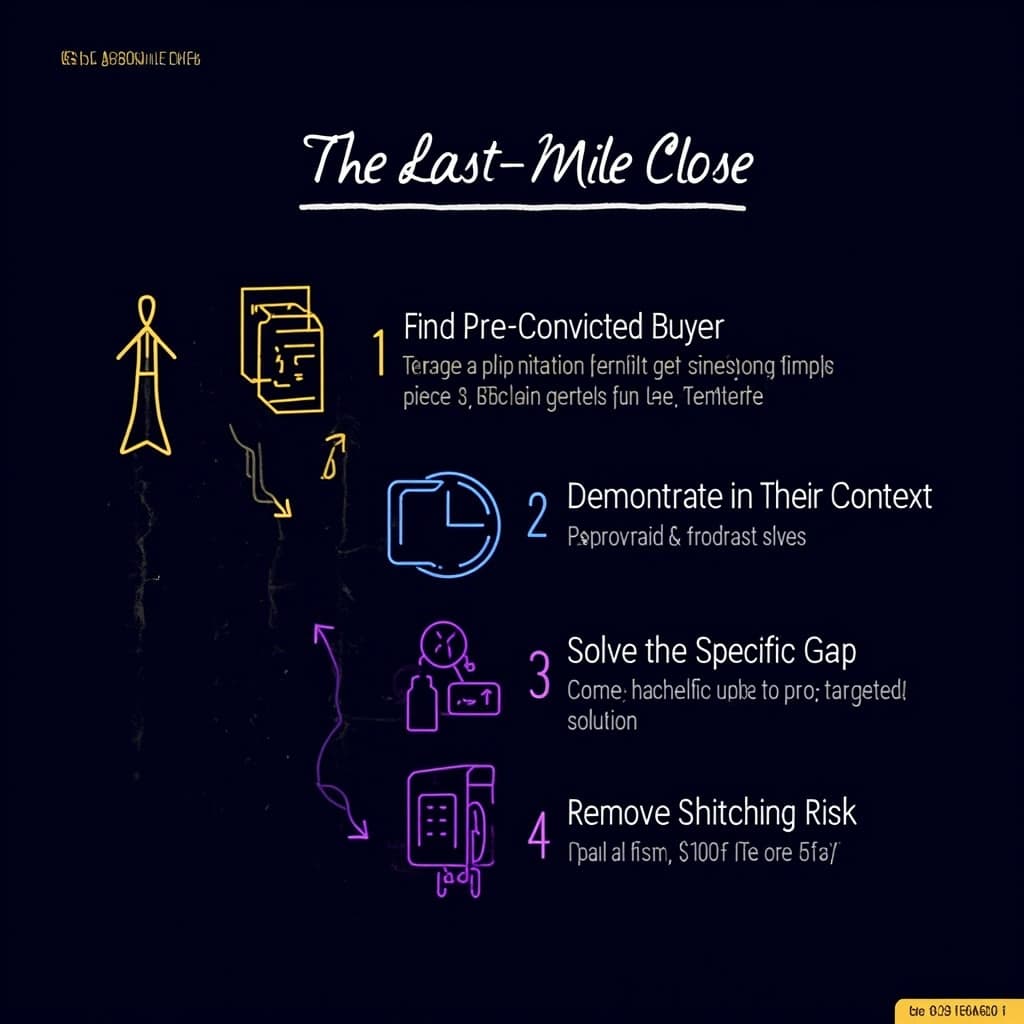
TL;DR: Every indie hacker chasing their first $1K MRR has a different story about what finally worked. Most of them describe a sequence that looks random. But when you look at enough of them, there's a pattern underneath: the conversion tactics that work for first revenue aren't about finding more channels. They're about showing up at the exact moment the potential customer has already decided to buy but hasn't yet figured out how. Here's the sequence indie hackers use to find that moment.
I spent two weeks collecting first-revenue stories from indie hackers who crossed from zero to their first paying customer in 2026.
Not success stories from people who built and launched and the customers showed up. Those are usually survivorship bias. I wanted the stories where people struggled, tried things that didn't work, figured something out, and then the revenue started.
The pattern that kept showing up wasn't what I expected.
Most of the advice out there is about channels: cold DMs, content marketing, Reddit, Product Hunt, SEO, paid ads. Pick a channel, go deep, measure. That advice isn't wrong. But it's incomplete. It doesn't explain why the same channel works for some people and not others who are doing everything "right."
What I found: the conversion tactics that work for first revenue aren't primarily about channel selection. They're about showing up at the exact moment the potential customer has already decided to buy but hasn't yet figured out the "how." You're not creating demand. You're intercepting demand that already exists and solving the last-mile problem.
The Last-Mile Problem in First Revenue
Here's what most indie hackers miss when they're chasing their first revenue: the potential customer often knows they have the problem you solve. They've already decided they want a solution. They haven't bought yet because they haven't found the right solution or they haven't found a version they trust.
The gap between "I know I need this" and "I just bought this" is the last-mile problem. And the way most indie hackers approach first revenue, they're trying to create the "I know I need this" moment from scratch. That's expensive in attention and persuasion.
The indie hackers who cross first revenue fast have figured out where to find the people who are already past that decision and stuck on the execution.
Where to Find Pre-Convicted Buyers
Three places where the demand is already there, just waiting for the right solution:
1. Communities where people are actively complaining about the problem you solve.
Not general communities. Specific ones where the complaint is live. If you build a scheduling tool for therapists, find the therapist communities where people are complaining about their current scheduling system. They're not complaining about "I wish there was a scheduling solution." They're complaining about specific things their current solution does wrong. That's a pre-convicted buyer in problem-recognition mode.
Your entry point isn't "have you heard of our product?" It's "I noticed you're struggling with [specific complaint]. We built something that specifically solves that. Want to see if it would work for you?"
2. Threads where people are asking for alternatives to an existing solution.
These are gold. Someone has named their problem, often by naming what they want to replace. "I'm leaving Calendly because X" shows up in forums, in comments, in Reddit threads. Those people have already made the decision to switch. They're in evaluation mode. Your job is to make the evaluation easy and the transition cheap.
The indie hackers who win this channel respond directly to the thread, not with "check out our product" but with a specific answer to the specific complaint. One response that solves the exact stated problem is worth more than ten generic "have you tried us" messages.
3. Early-adopter communities where people are already using AI tools and frustrated with specific gaps.
This is the 2026-specific opportunity. The vibe coder audience is large, active, and vocal about what's missing in their workflows. They're already using Cursor, Lovable, Bolt, Claude. They're generating frustration about the gaps in real time, publicly. That frustration is the signal.
The indie hackers who show up with a specific solution to a named frustration in these communities don't need to persuade. They need to demonstrate.
The Three-Step Sequence That Closes First Revenue
Once you've found the pre-convicted buyer, the close has three steps:
Step 1: Demonstrate in their context, not yours.
Show the tool working on their specific use case, not a generic demo. If you're selling a code review tool to a team using Cursor, show it reviewing a Cursor project, not a pristine example you built for the demo. The specificity of context is what builds trust with early adopters. Generic demos don't.
Step 2: Solve the specific thing they said was the problem.
This sounds obvious. Most people don't do it. They give the tour of features and let the prospect figure out which feature solves their problem. The close is faster when you map the feature to the specific complaint directly: "You mentioned the issue was X. We built feature Y specifically for that. Here's how it works on your exact case."
Step 3: Remove the risk of switching.
For first revenue, the risk isn't the price. The risk is "will this actually work for me?" The closer removes this by offering a short trial that maps to the prospect's actual use case, not a generic trial.
The phrase that works: "Give it a week on your real project. If it doesn't solve the specific problem we talked about, tell me and I'll help you anyway." That "help you anyway" part is what converts. It signals confidence and removes the last hesitation.
What Channels to Actually Prioritize
Here's the honest ranking of channels for first revenue in 2026, based on conversion speed and signal quality:
1. Direct outreach to pre-convicted buyers in specific communities.
Highest conversion rate, highest effort. You have to find the people who have already named the problem, evaluate them, reach out personally, demonstrate in their context. But the close rate is 5-10x higher than cold outreach because the demand is already there. This is the channel most indie hackers skip because it doesn't scale. That's exactly why it works.
2. Reddit and Indie Hackers threads where people are asking for alternatives.
High signal, variable effort. The key is responding to the specific thread with a specific answer to the specific complaint, not a product pitch. The founders who win this channel are solving problems in public, not promoting products.
3. Build in Public updates in relevant communities.
Lower conversion rate, higher compounding. This one builds slowly but compounds. Every update is proof of work and a signal to people who are watching. The conversion mechanism is familiarity and trust built over time, not a direct ask.
4. SEO and content targeting bottom-of-funnel keywords.
Longest time to conversion, highest leverage once ranking. If you have six months before you need revenue, this compounds hard. The founders who build an SEO presence in 2026 are setting up the distribution machine for 2027. But this channel has a lag that makes it useless if first revenue is urgent.
The Honest Version of What Works
The conversion tactic that works for first revenue is different from what works for growth-stage revenue. For first revenue, it's relationship-anchored. You convert because someone trusts you, not because your content ranks or your funnel is optimized.
The indie hackers who cross first revenue fastest are usually the ones who spent time in the communities where their ICP lives, contributed genuinely, and turned that familiarity into a warm conversation when the product was ready.
The people who tried to automate first revenue through cold outreach or generic content first usually took longer. Not because the approach was wrong. Because the relationship signal was missing, which means they were trying to create the demand signal from scratch, which is harder.
The founders who cross first revenue fastest have figured out that first revenue is a relationship game, not a channel optimization game. They show up where the demand already exists, they solve the specific problem, and they remove the switching risk. All three together.
Luka helps you identify which growth stage is actually blocking you. For indie hackers at first-revenue stage, the bottleneck is usually activation and trust-building rather than visibility. Luka connects your data signals and tells you whether your issue is the conversion step or something upstream. It helps you focus on the right problem at the right stage. You check it in the morning, know what to work on, close it, go execute. See how Luka works.
Frequently Asked Questions
How long does it take to cross first revenue?
The indie hackers who had a warm community to draw from crossed first revenue in 2-4 weeks from launch. The ones who started cold usually took 2-3 months. The difference wasn't product quality. It was whether they had access to pre-convicted buyers or had to create the demand signal from scratch.
Should I launch on Product Hunt for first revenue?
Product Hunt can work for first revenue if you have a genuine story and an audience that cares about your category. But it's a single-day spike that requires an existing network to get initial traction. For most indie hackers launching for the first time, Product Hunt alone won't close revenue. It's one channel in a sequence, not the whole play.
How do I know if my conversion issue is the channel or the product?
The test: if you're having conversations with potential customers who are interested but not converting, the issue is usually trust or switching risk. If you're not having conversations at all, the issue is usually channel or targeting. The indie hackers who solve first revenue fastest iterate on targeting until they find the pre-convicted buyer. Then the product speaks for itself.
What's the biggest mistake indie hackers make in first revenue?
Trying to close too fast on cold prospects. The instinct when you need revenue is to ask for the sale immediately. First revenue almost never works that way. The sequence is: show up where the demand exists, demonstrate in their context, solve the specific thing, remove the switching risk. The close happens naturally at the end of that sequence. Trying to compress it by asking for the sale first is the mistake that extends the zero-revenue period.
About the Author